
When JOGO Games, the leading creator of Fortnite UEFN experiences, set out to build Cash Heist City, they weren’t just making another UEFN experience. They were crafting a full-scale playground inside Fortnite. With a living city, dynamic missions, multiplayer heists, and a sun-soaked Miami vibe, the map needed to feel both massive and meticulously detailed. To pull it off, JOGO partnered with KitBash3D, producer and distributor of the world’s largest library of customizable 3D Kits and no stranger to building Fortnite experiences.
Together, they spent months designing a city that balances style with performance, layering concept art, modular architecture, and thousands of in-engine tweaks to make every street corner feel alive. Here’s how they built one of the most ambitious UGC worlds ever created for Fortnite.
Defining the Soul of the City
Before a single building was placed in UEFN, both teams aligned on the heart of the island. JOGO needed an anchor, a structure that represented the world, grounded the experience, and served as the emotional center of the map.
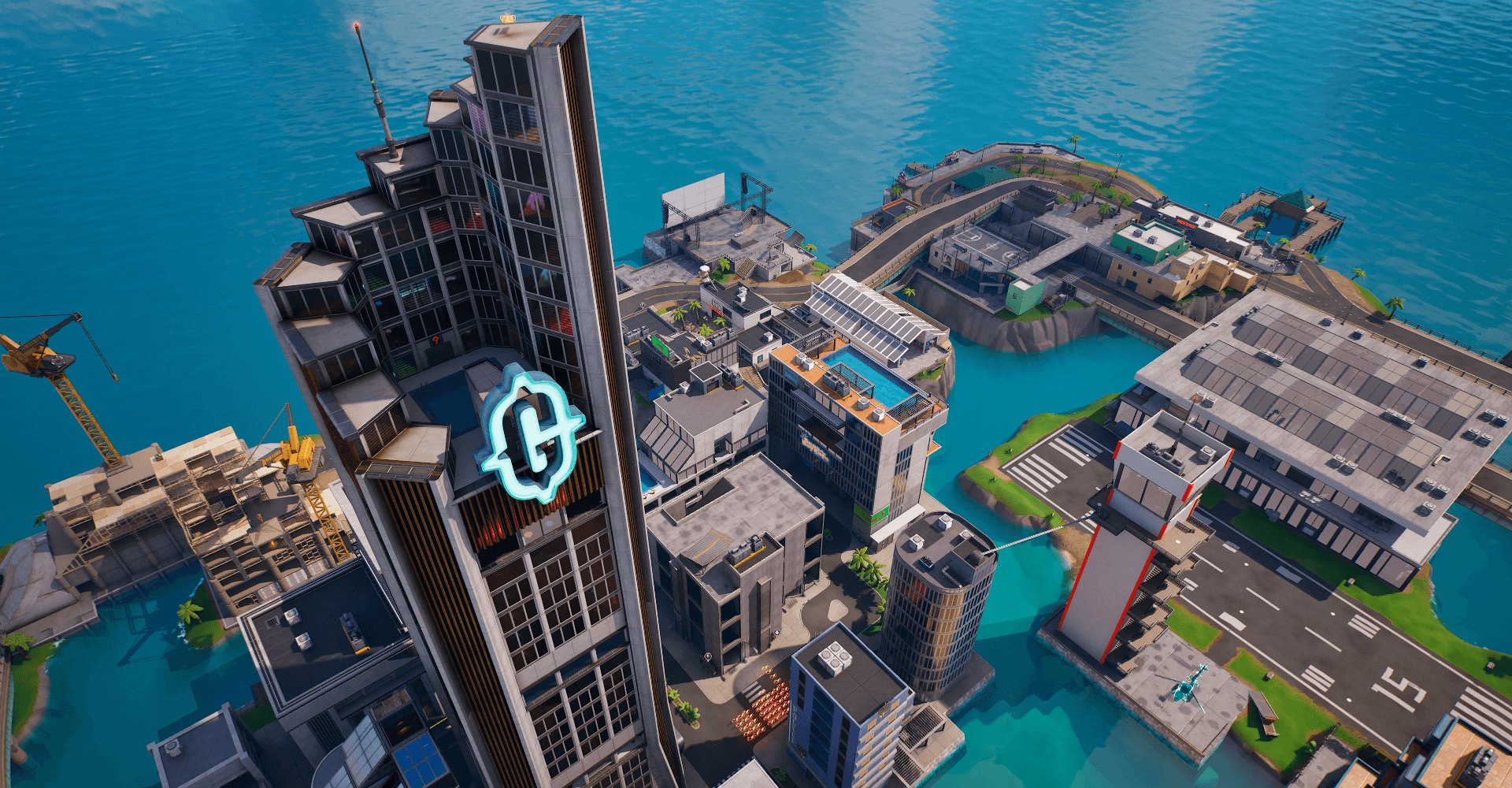
That central location became the Grand. Visible from every major location on the island, players will spawn, get their loadouts, and return to this central hub often.
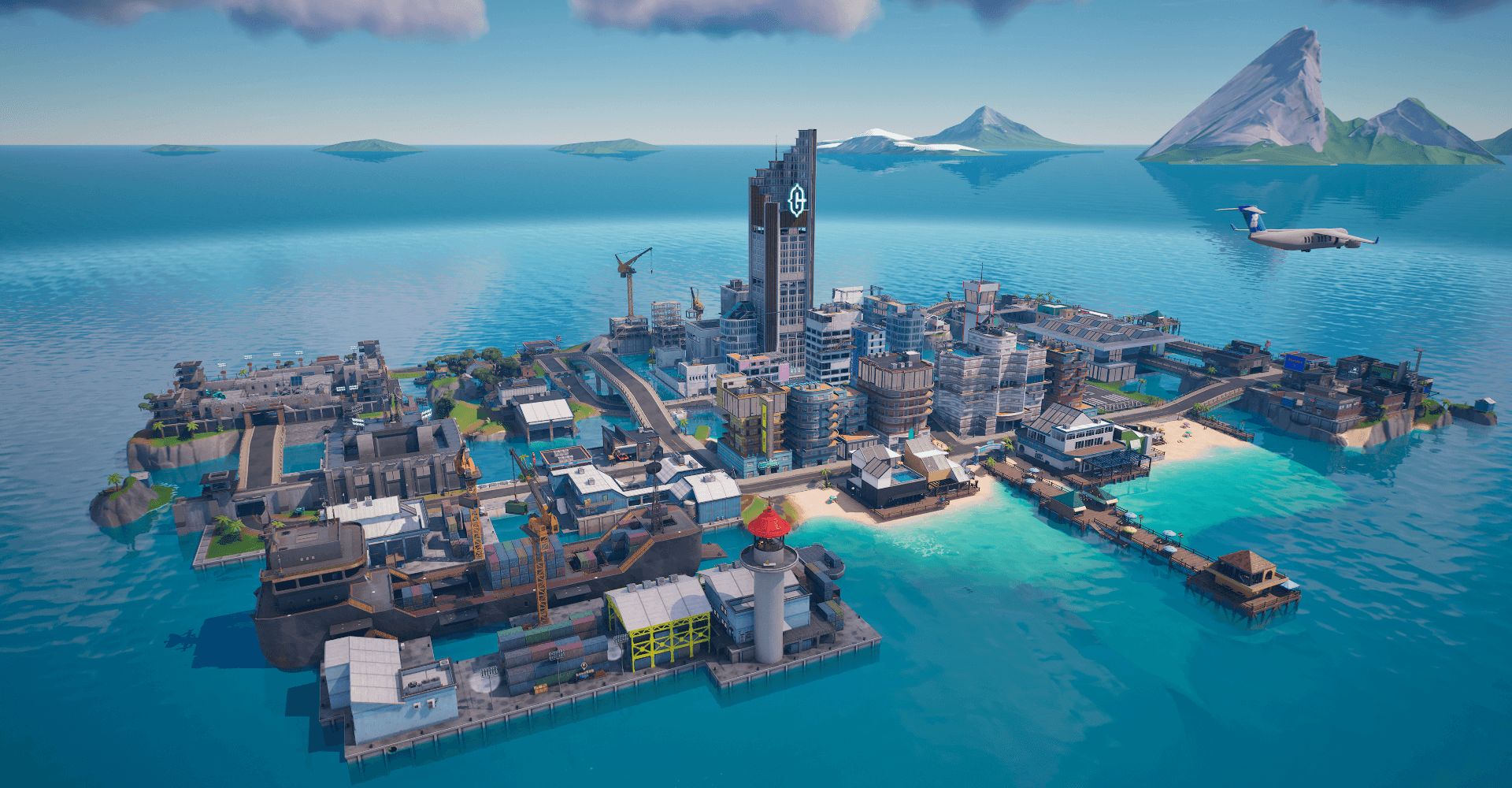
“All empires start with killer headquarters,” said Chad Mustard, COO of JOGO Games. “With The Grand, we knew going big was non-negotiable. We needed a structure that could support players as jobs became more complex, where information, decisions, and outcomes all converged. Sure, it had to be flashy, but it was really about creating a central command that could carry the weight of the entire operation as the city opened up around it.”
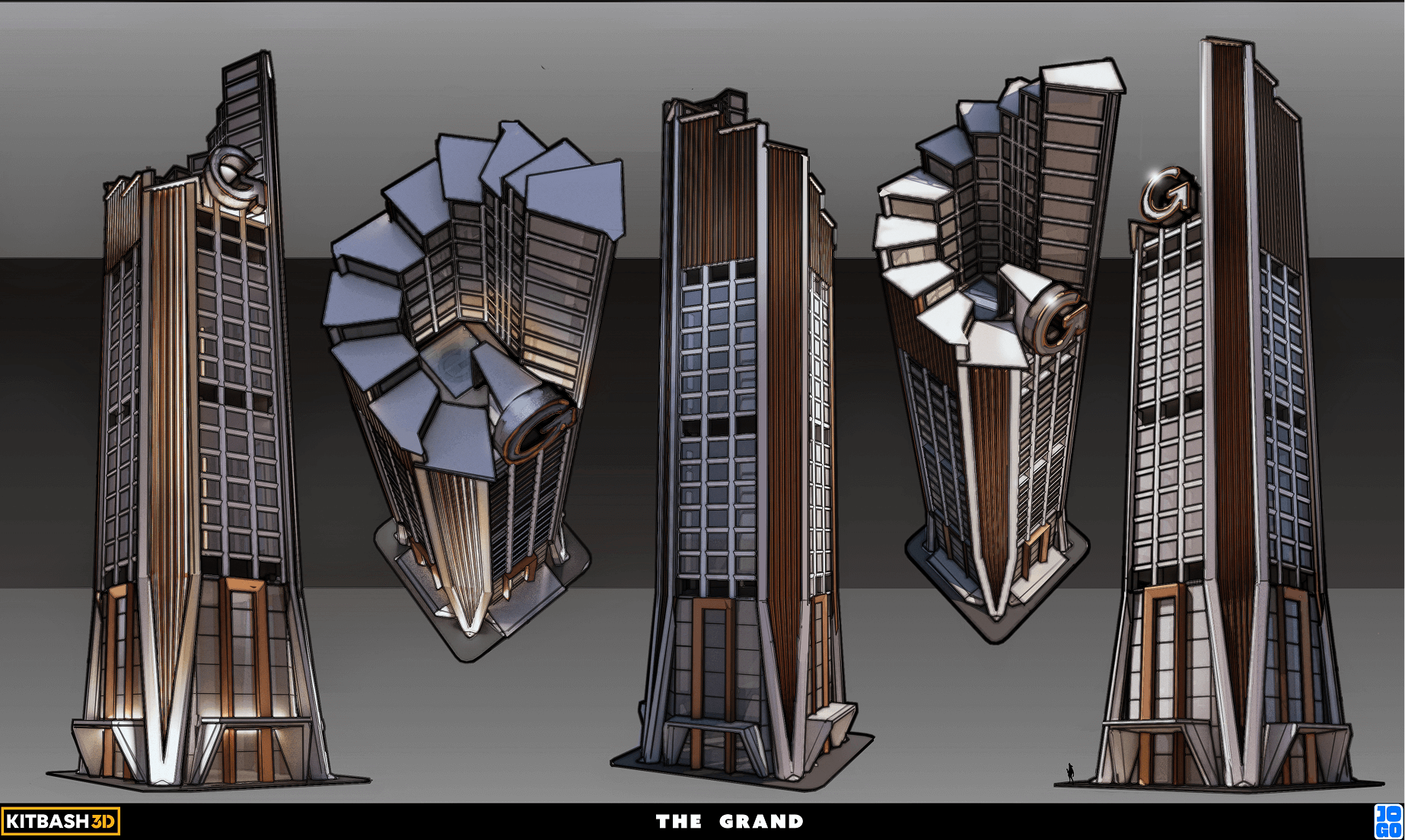
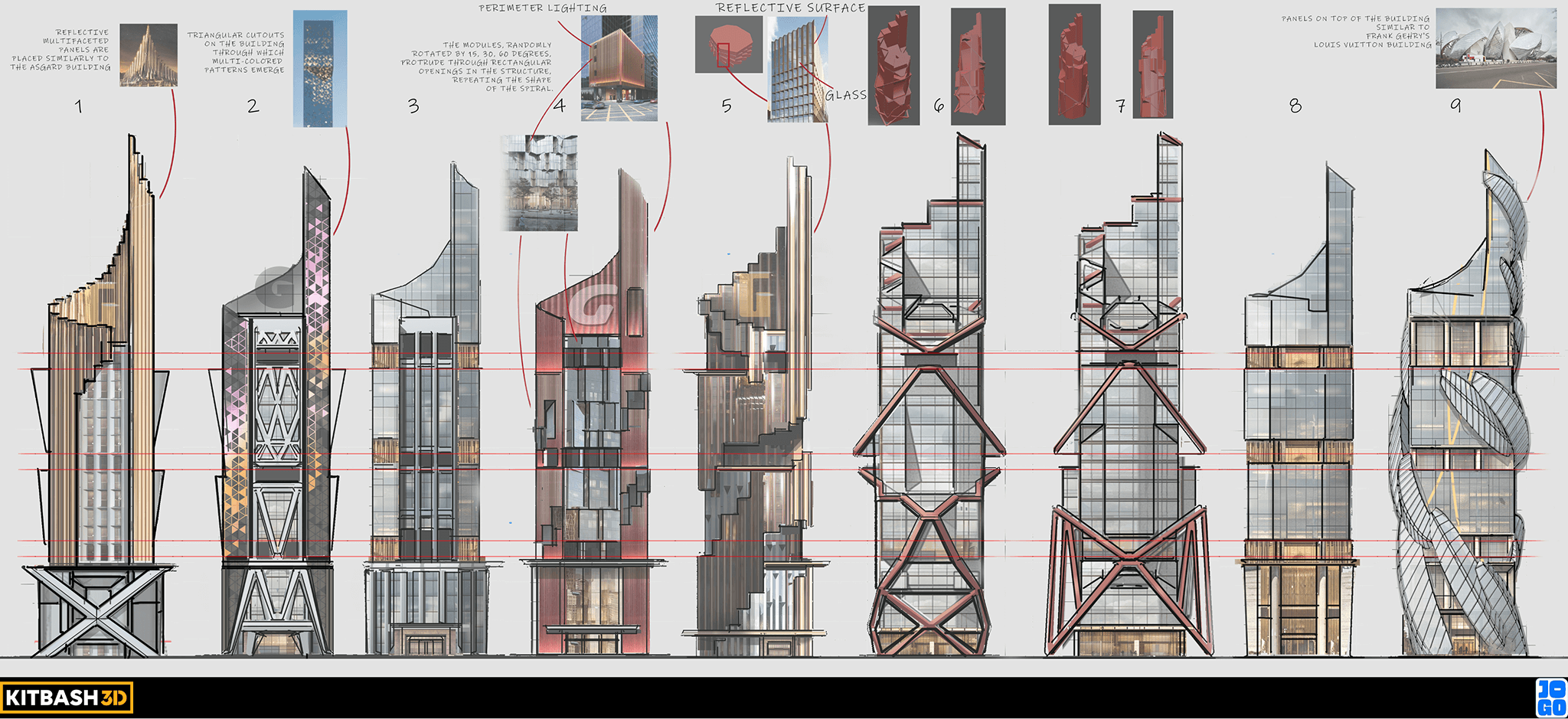
The KitBash3D team led the full concept development of this megastructure, exploring color palettes, signage treatments, and a nighttime lighting shader that would make it visible from almost anywhere on the island, day or night.
From the Grand’s early sketches, a broader identity emerged: saturated Miami hues, bold shapes, neon nightlife, and a visual warmth that carried across the city’s districts. Those early explorations informed everything they built afterward, including downtown skyscrapers, art-deco hotels, and boardwalk storefronts.
Turning Art Into Playable Space
With the vision locked in place, the next challenge was scale. JOGO’s island is massive, and UEFN comes with tight performance ceilings, so every structure had to be modular, memory-efficient, and endlessly reusable. That constraint became a creative advantage.
KitBash3D built hundreds of modular pieces that formed the foundation of the Grand, the Vault, Downtown, and the Boardwalk. Walls, windows, roofs, signage mounts, interiors, and traversal elements. Everything snapped together cleanly, allowing JOGO to remix, recolor, and expand into an entire city.
“At this scale, you can’t treat buildings as vacant decoration,” said Banks Boutté, co-founder of KitBash3D. “Everything had to be modular, performant, and flexible enough to support unknown use cases once players landed. We had to assume assets would be pushed, combined, and repurposed in ways we couldn’t predict, then build them so those future decisions wouldn’t paint the team into a corner. It’s less about solving one puzzle and more about leaving room for the next one.”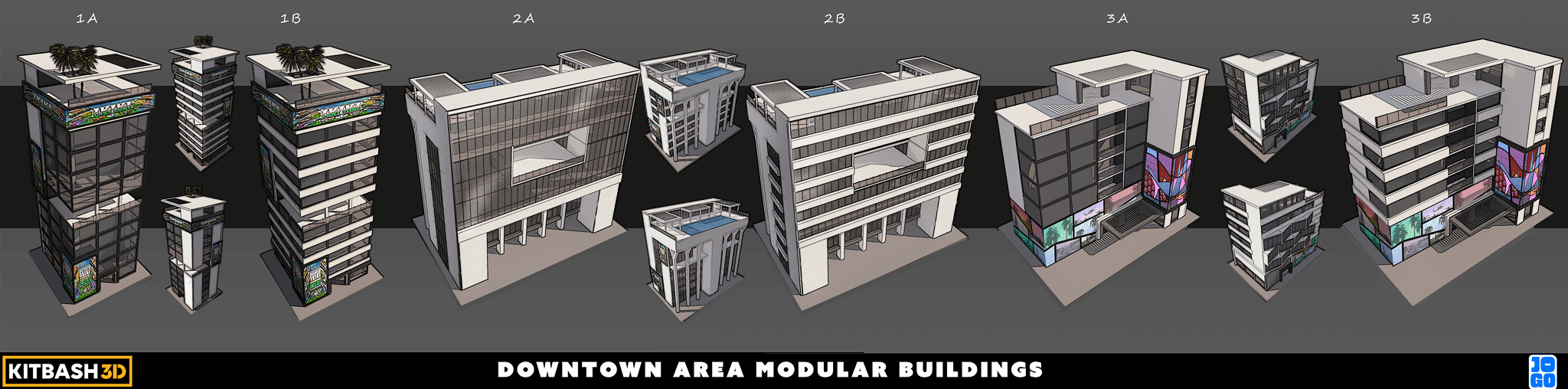
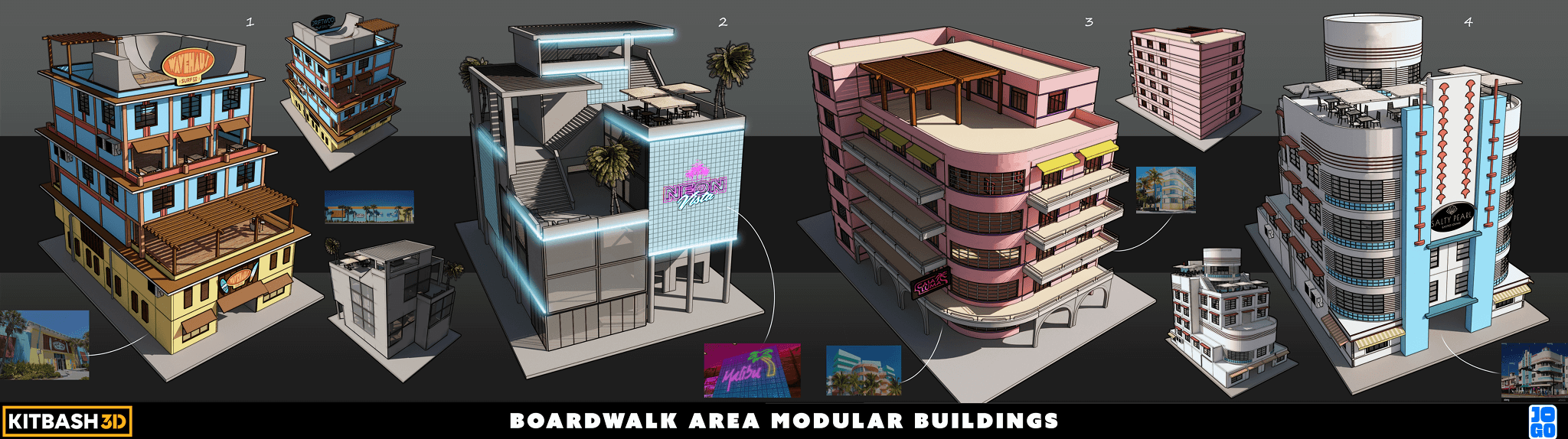
Verticality was essential, so rooftops and interior-ready layouts were designed from the start to support traversal, cover, and choke points. (“Batman should be able to hop across the rooftops,” became a real piece of feedback, and we built for it.)
This modular library became the toolkit JOGO used to build their Downtown district, supporting everything from storefronts and hotels like the Rock Bottom Motel to reconfigurable boardwalk shops, iconic landmarks like the Neon Nights nightclub, and the vantage points that shape mission routes.
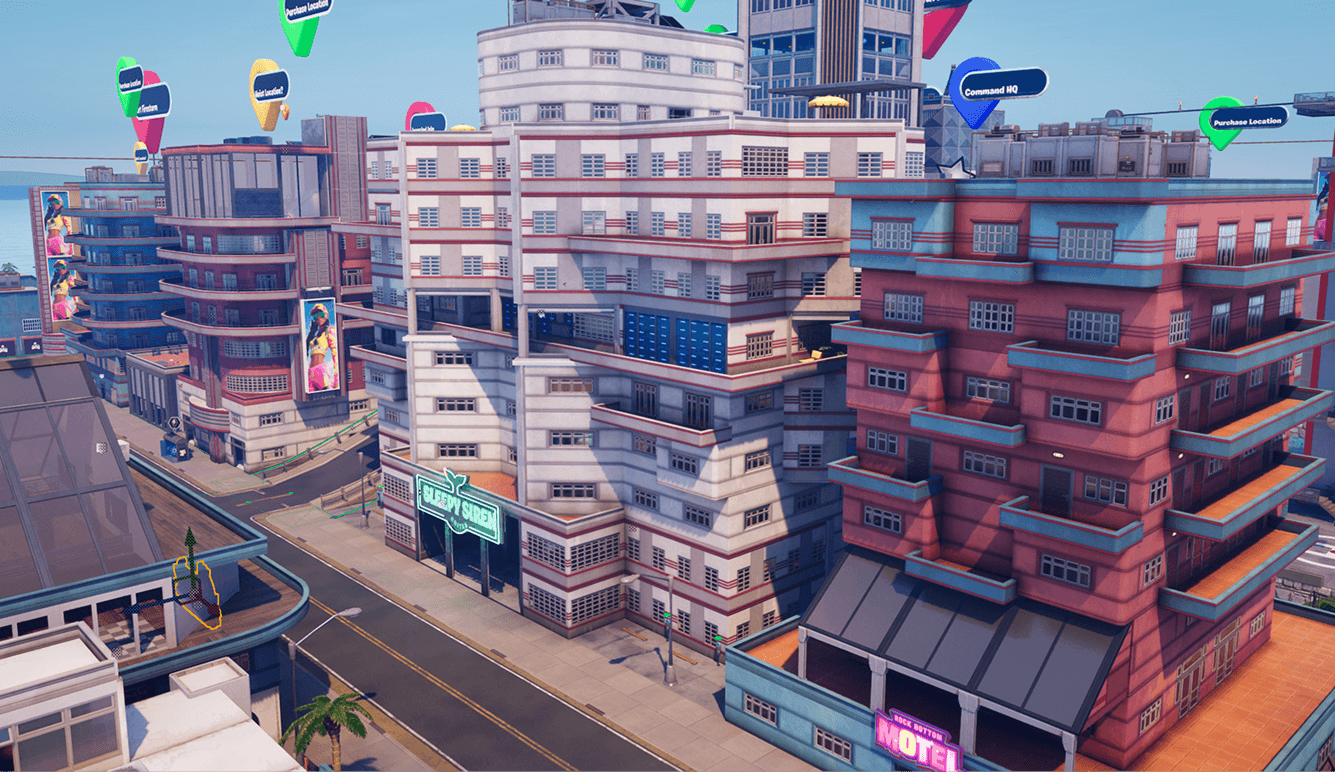
Every asset was optimized for UEFN memory limits with clean collisions, carefully tuned LODs, and geometry designed for large-scale reuse. As JOGO filled out the map, they even incorporated KitBash3D pieces into entirely new structures, mixing assets with Unreal Engine’s native Kits to blend their world into something uniquely theirs.
“Once the scope was clear, the challenge shifted to execution,” Mustard said. “Every environmental decision had downstream consequences, from memory budgets to how quickly we could expand the city. We had to be disciplined about systems and sequencing, building spaces that could scale without slowing the team down. That strong operational foundation is what lets us move fast later, without cutting corners.”
Polishing the Experience
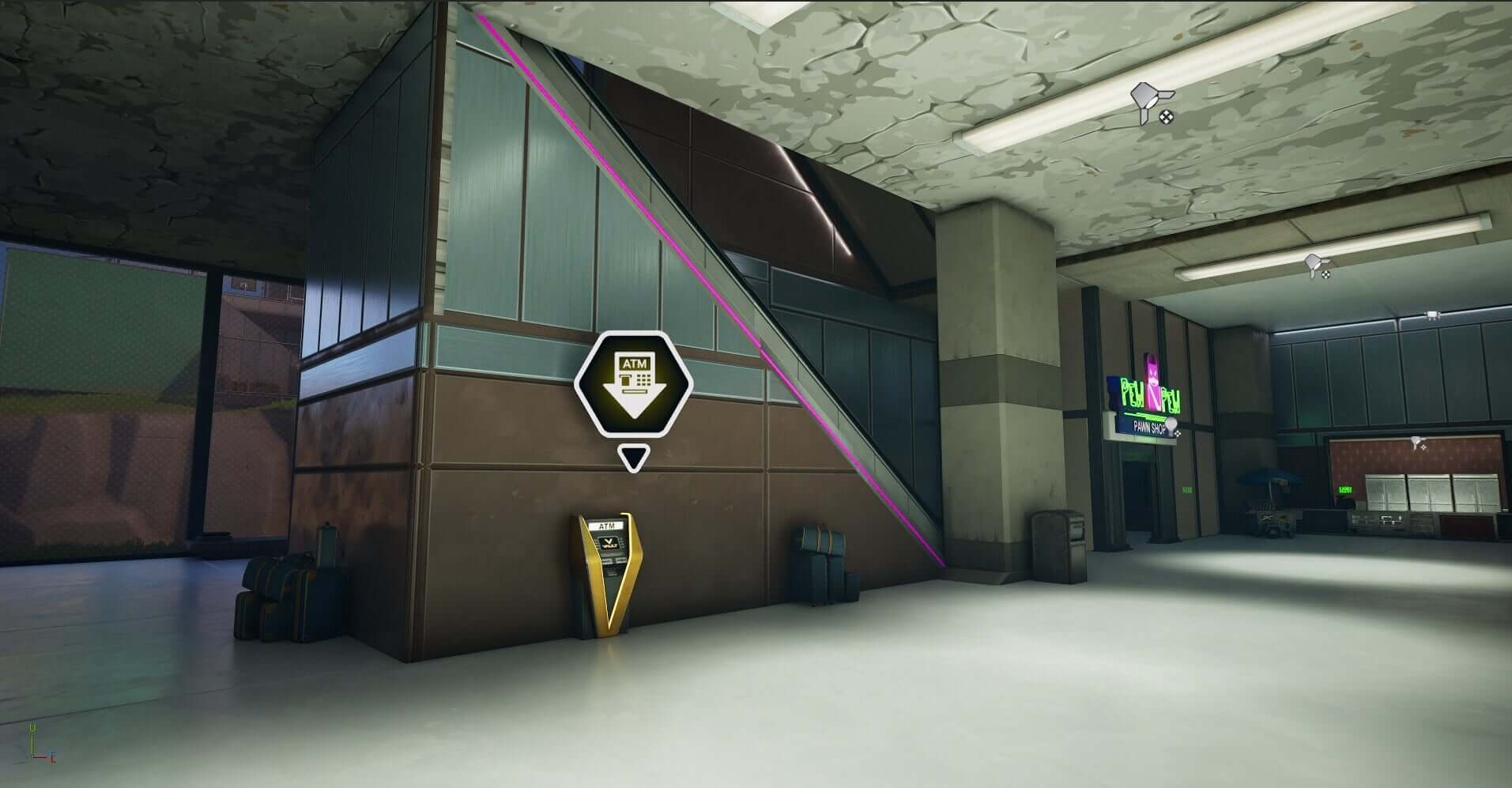
As the island neared completion, the final layer of identity came from the hero assets and lighting systems that tied everything together. From interactive props like ATMs dispersed throughout the island to structural elements like windows, walls, and roofs, every piece was designed to build a cohesive world ready for gameplay.
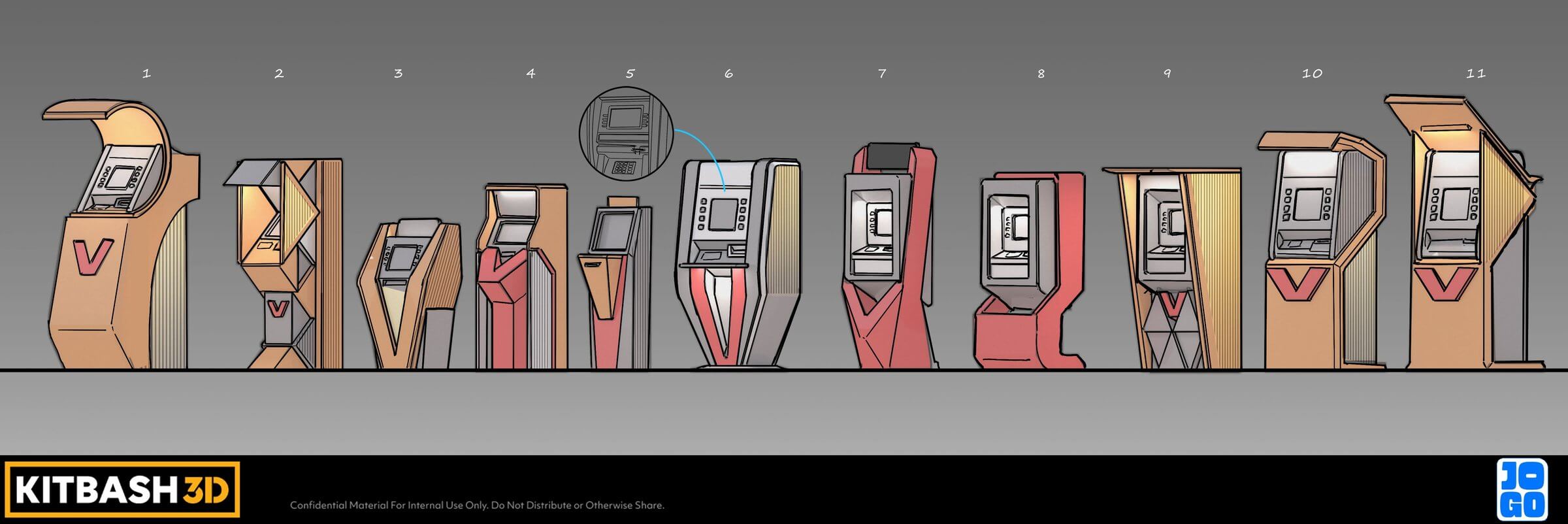
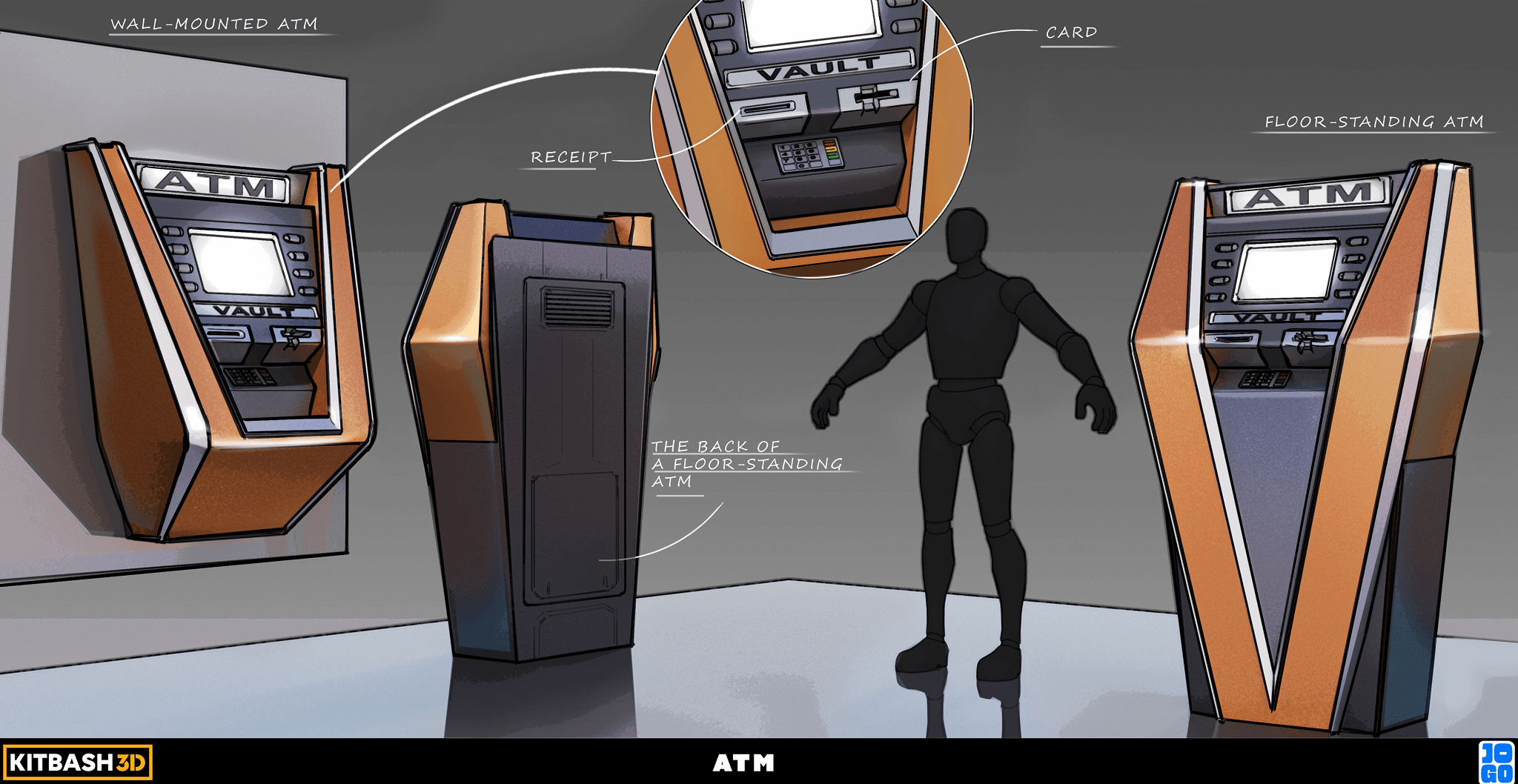
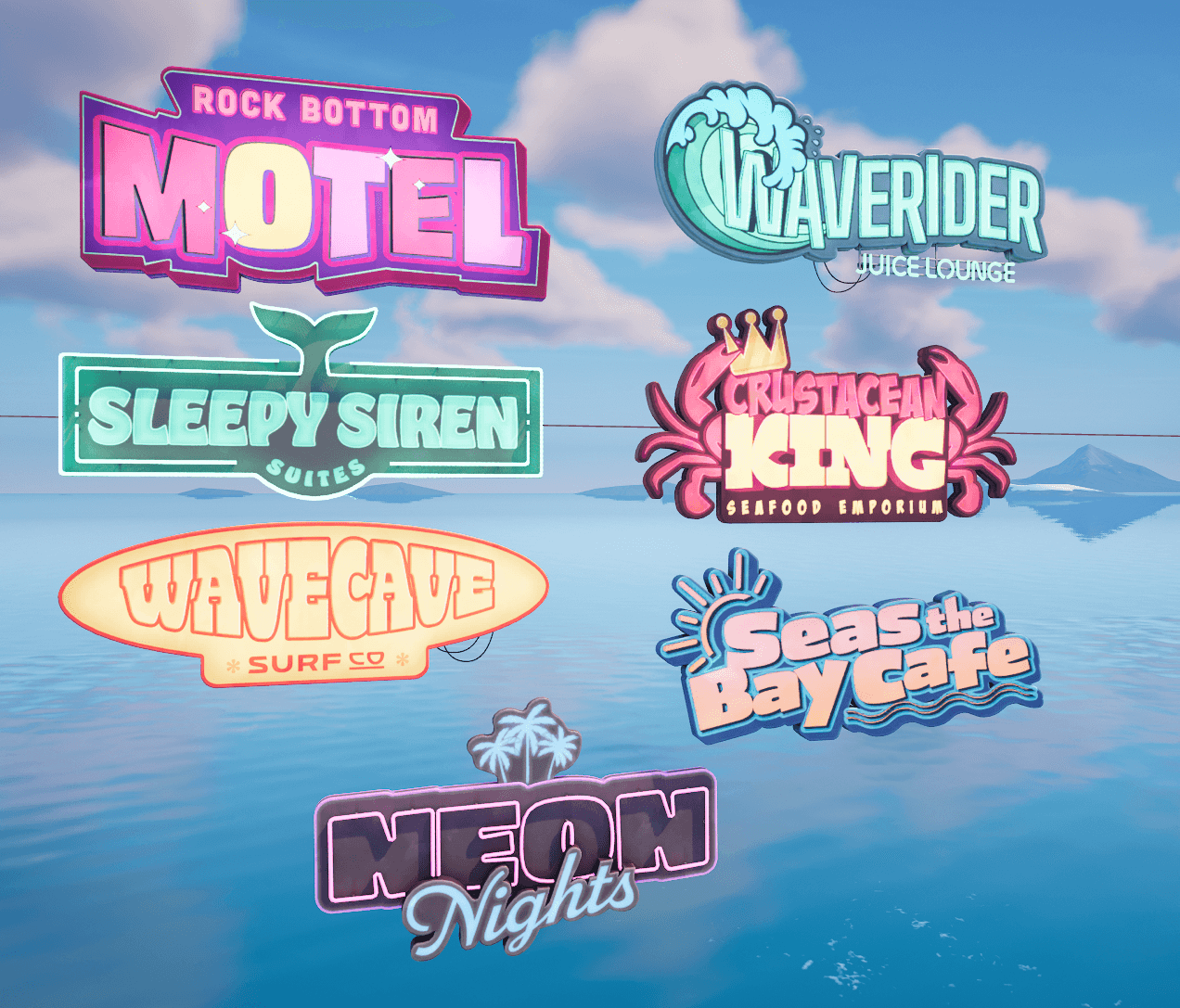
Signage became a defining visual pillar. From the Grand’s iconic “G” to the glowing facade of Neon Nights and the stylized hotel signs for Rock Bottom Motel and Sleepy Siren Suites, these pieces gave each district its own instantly recognizable personality, critical for wayfinding and for grounding players in the world.
And then came the nighttime transformation. To support JOGO’s vision of having the city come to life at night, to support JOGO’s vision, KitBash3D built a custom emissive shader that allows buildings to glow with Miami-style neon colors after sunset. The Grand and Vault signage automatically activate, and JOGO can override hues across districts to tune the mood. This became one of the most striking aspects of the final map, turning the city into a vibrant, glowing nightlife space.
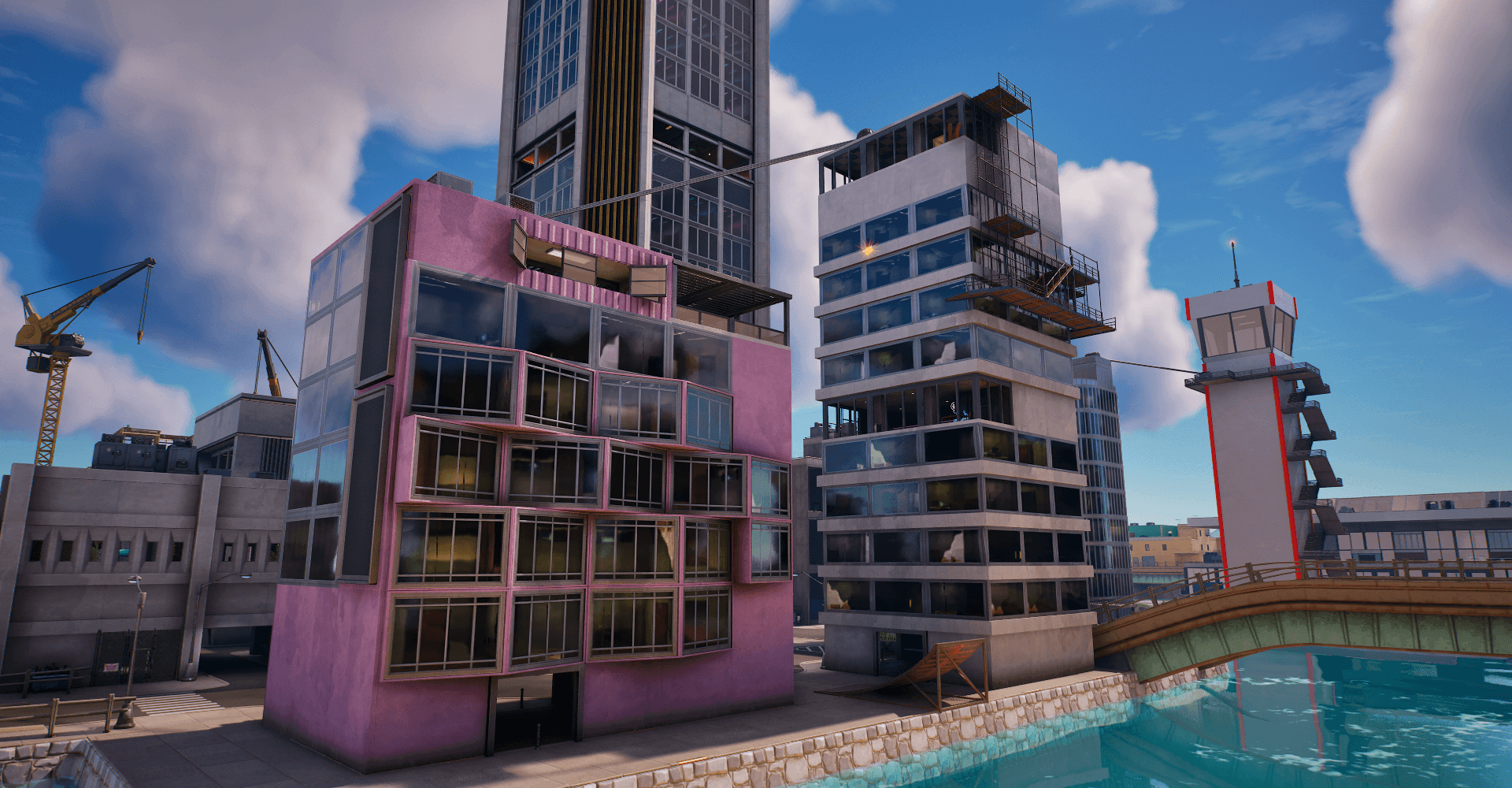
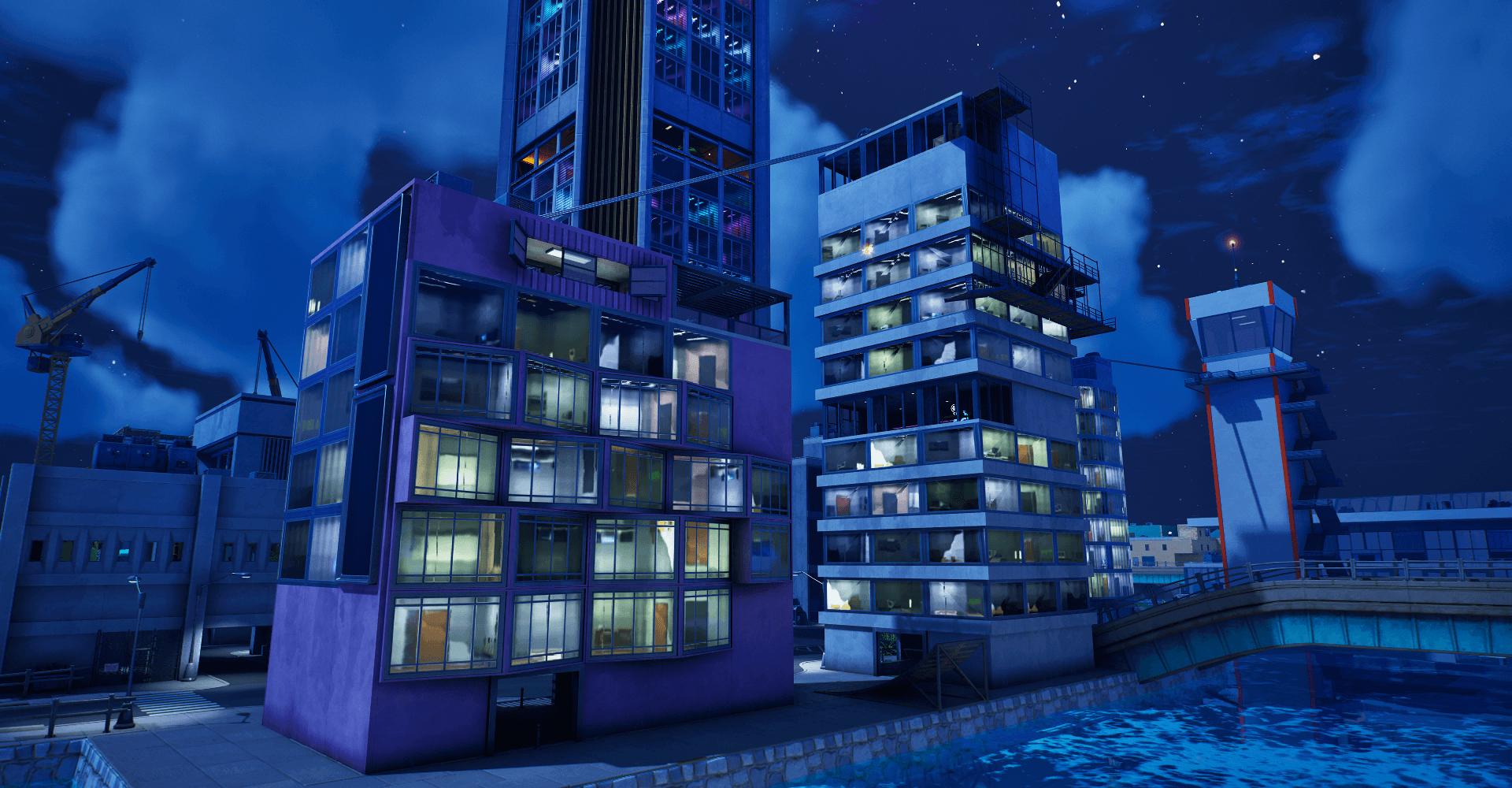
By the time JOGO entered deep playtesting, the world was fully built out. Interiors, rooftops, skyline silhouettes, and the waterfront all came together, forming a cohesive Miami-inspired world that feels alive whether you’re racing across the causeway or sneaking into the Vault.
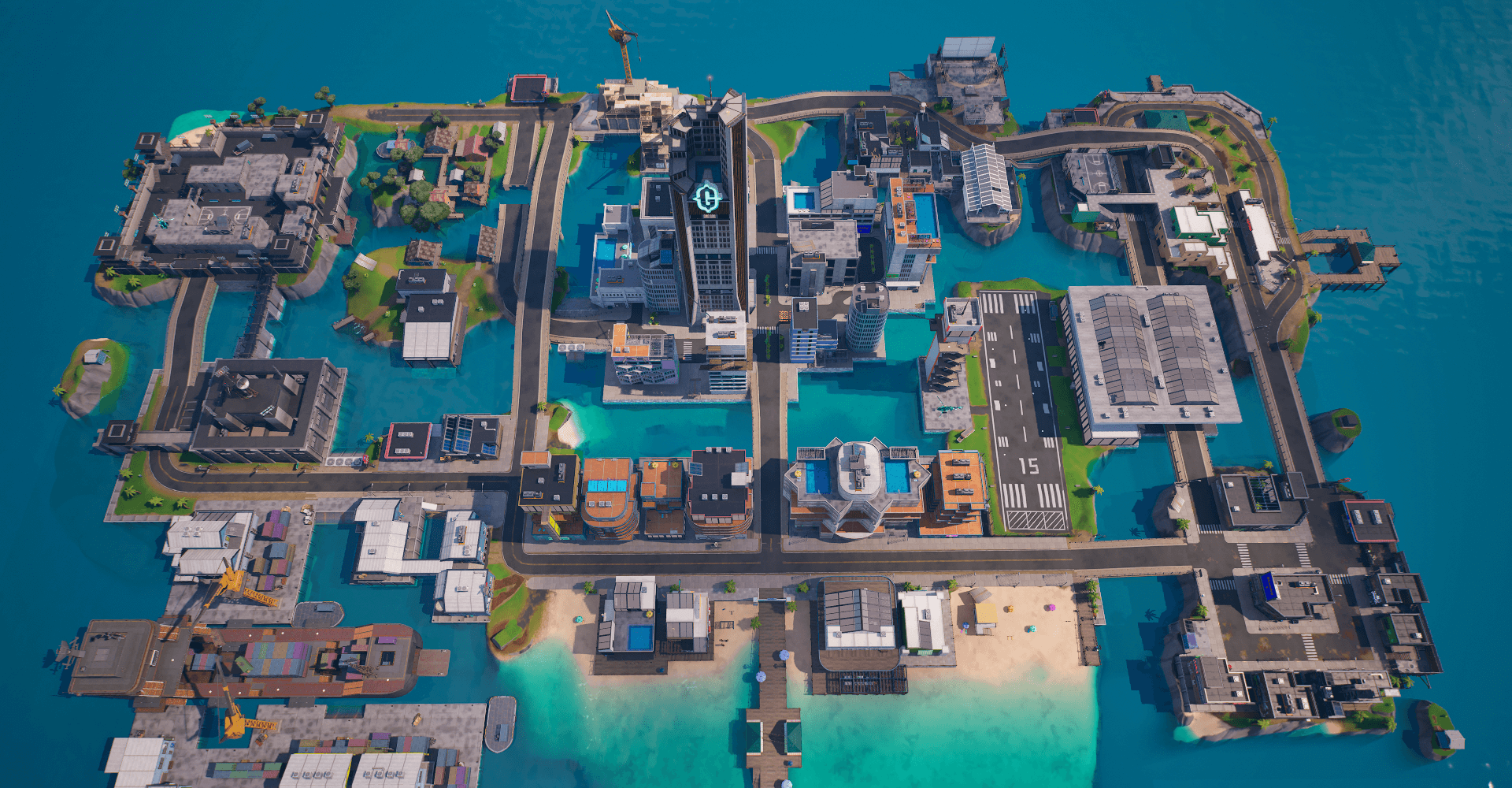
Explore the Map
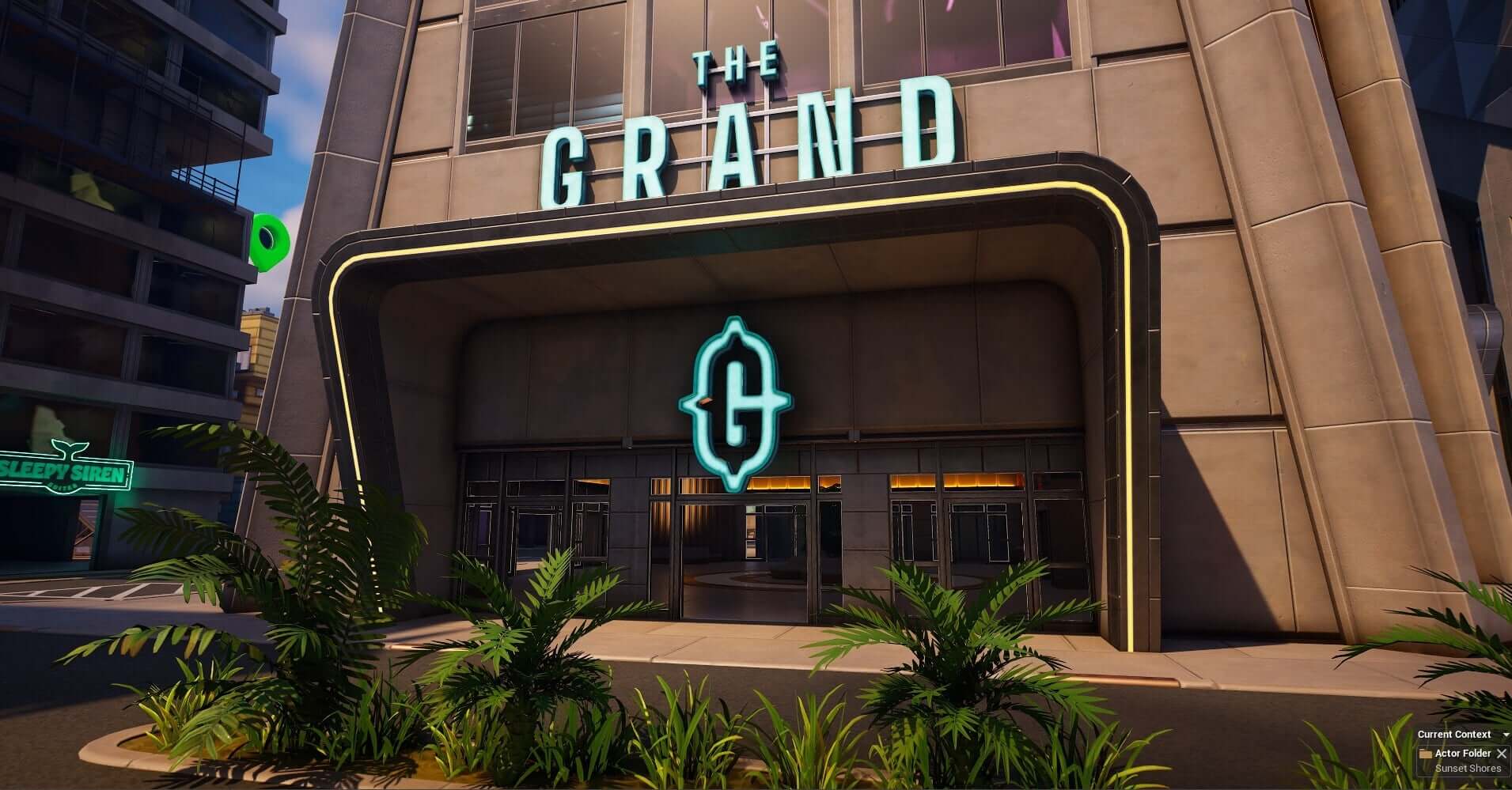
The Grand
The emotional and visual anchor of the island. Fully concepted and built by the KitBash3D team, with its distinctive signage and custom nighttime glow. Players spawn here, gear up here, and always know where “home base” is.
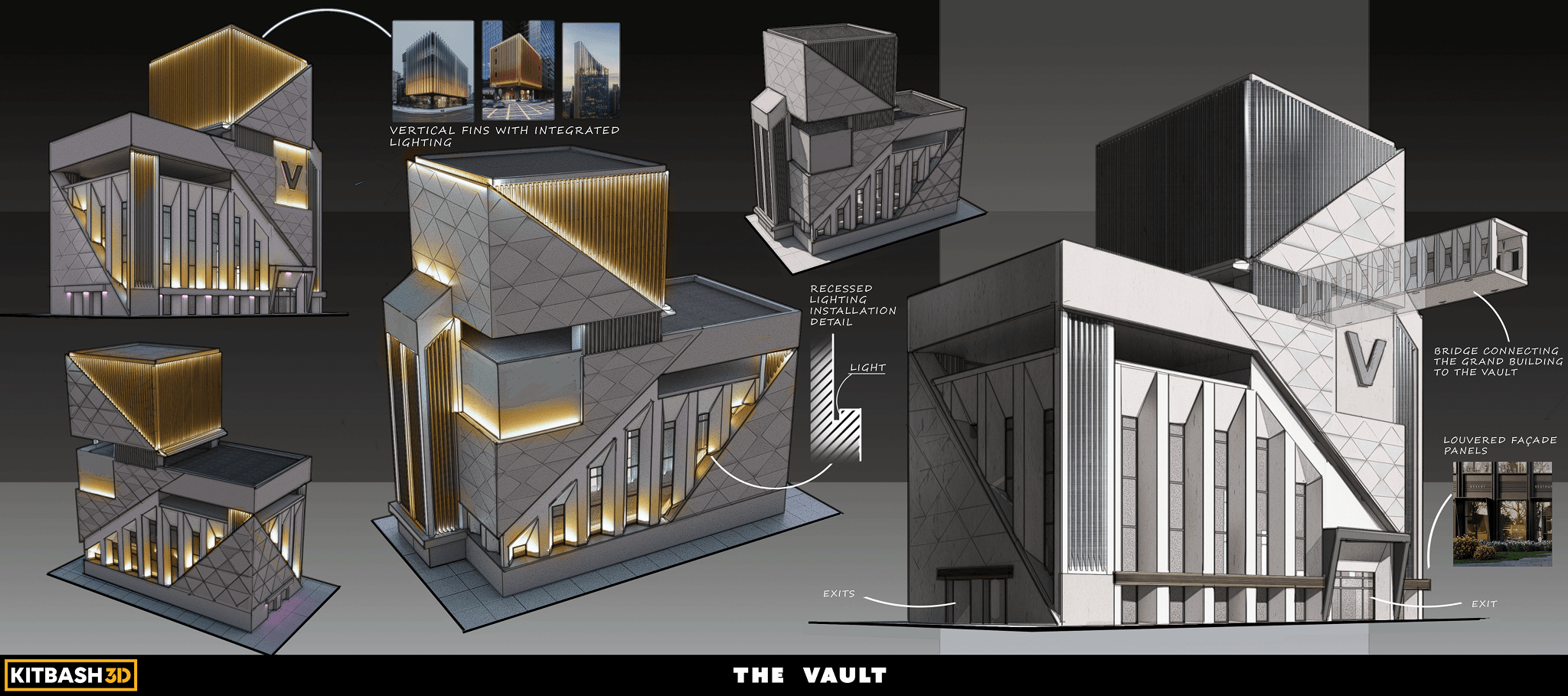
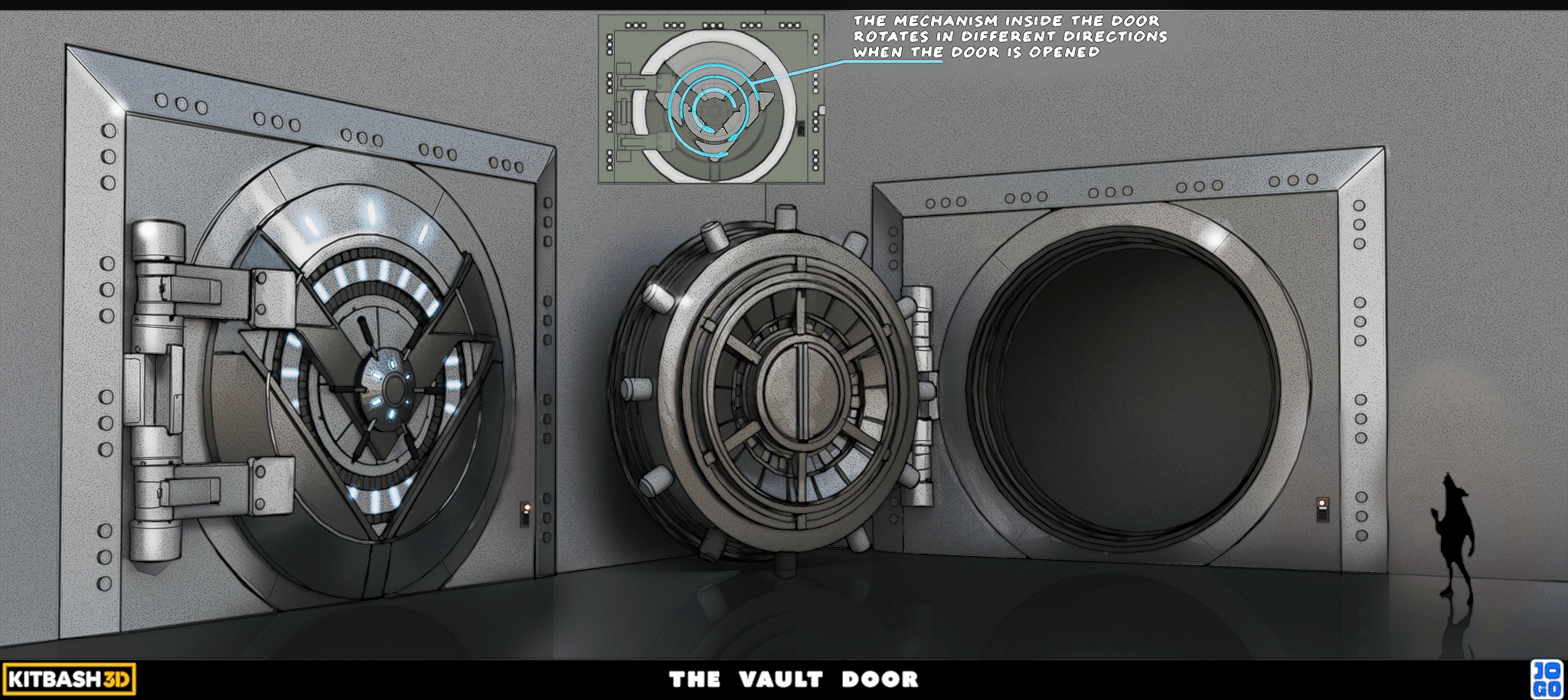
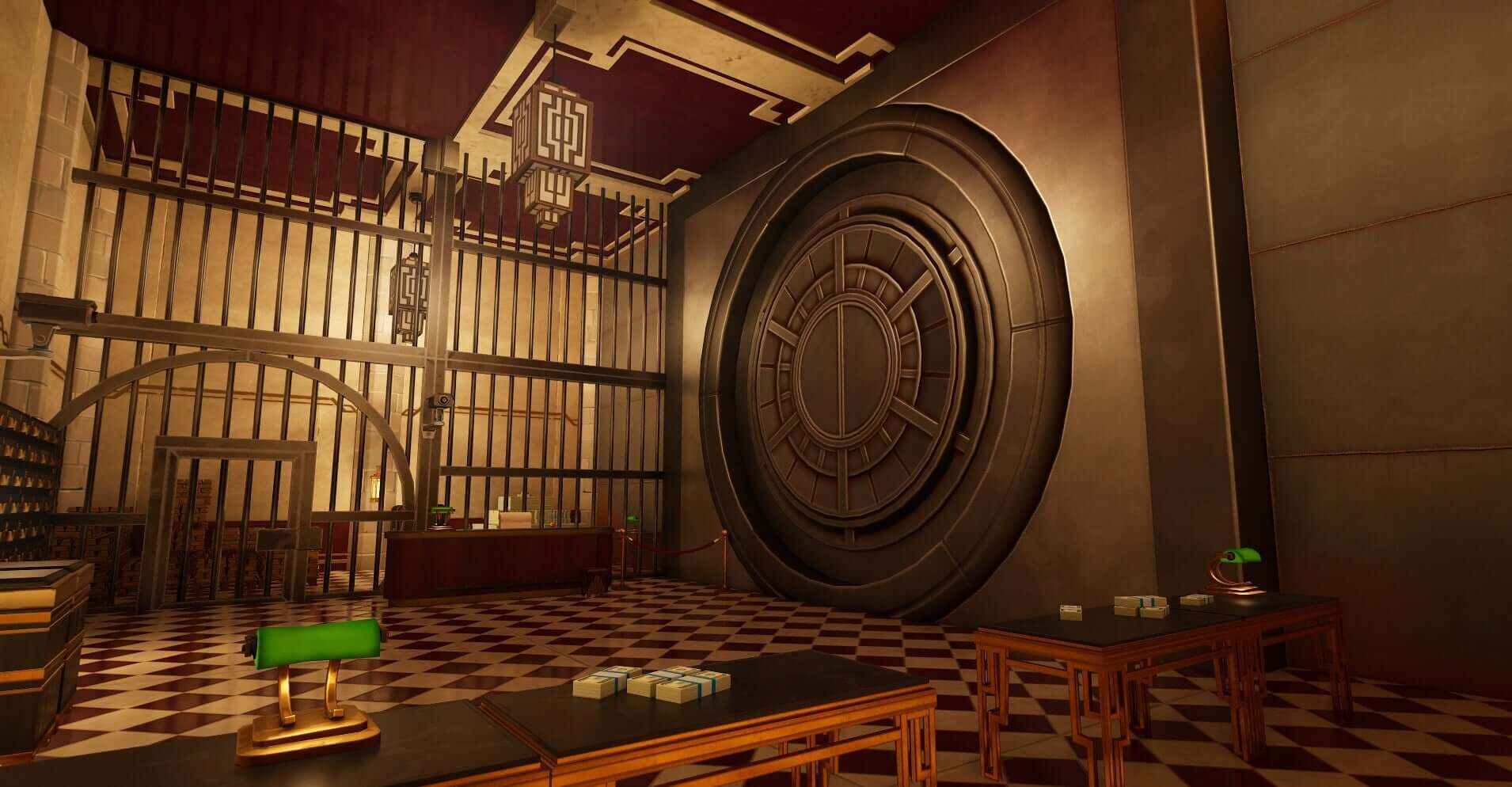
The Vault
A core gameplay space defined by KitBash3D's modular vault structure and iconic vault door. Surrounded by ATMs and mission-critical interiors, it’s one of the most interactive buildings in the city.
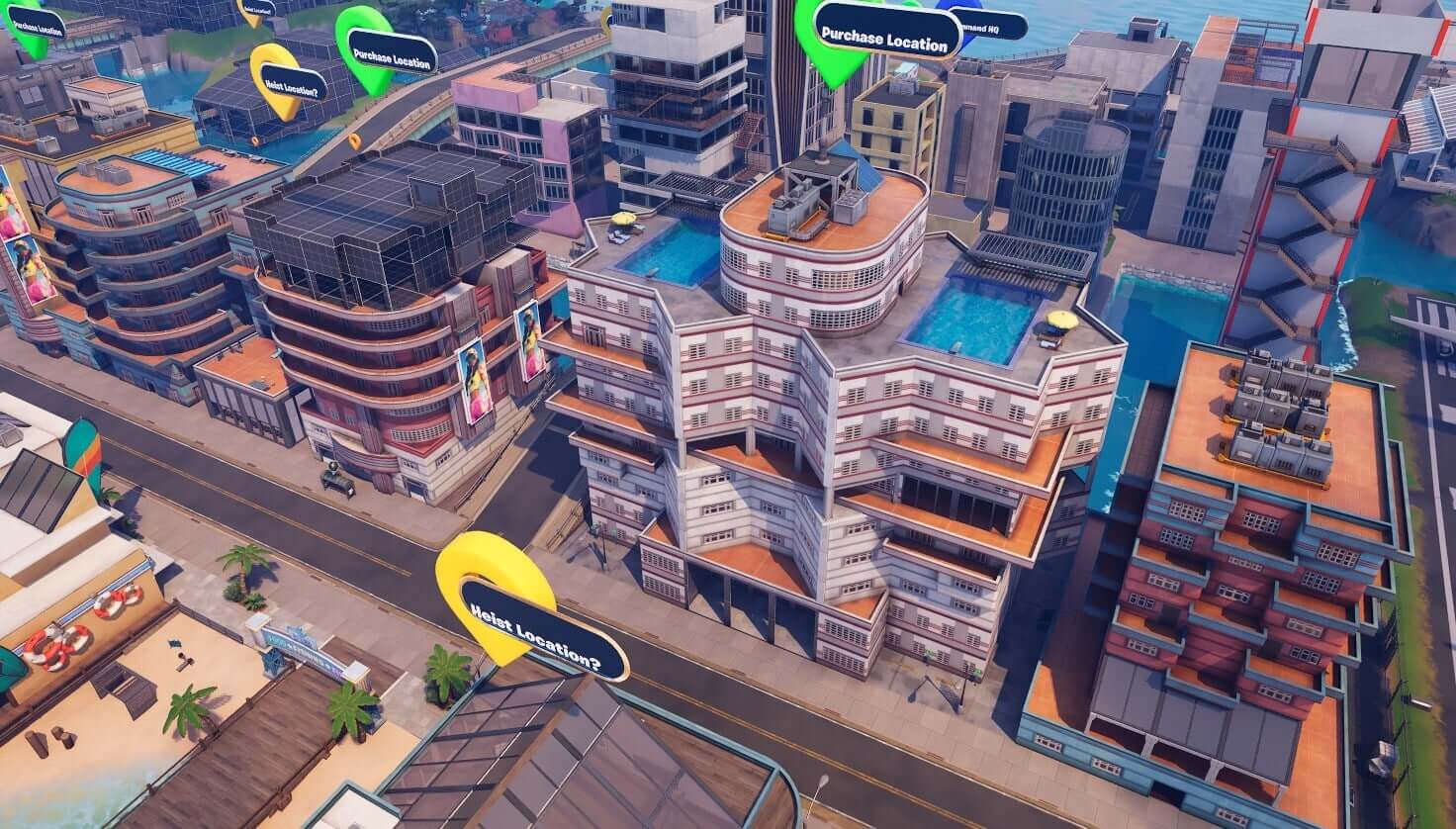
Downtown District
Built from KitBash3D tintable, reconfigurable modular skyscrapers, Downtown gives players vantage points, rooftop routes, nighttime glow, and interior-ready spaces for missions and exploration.
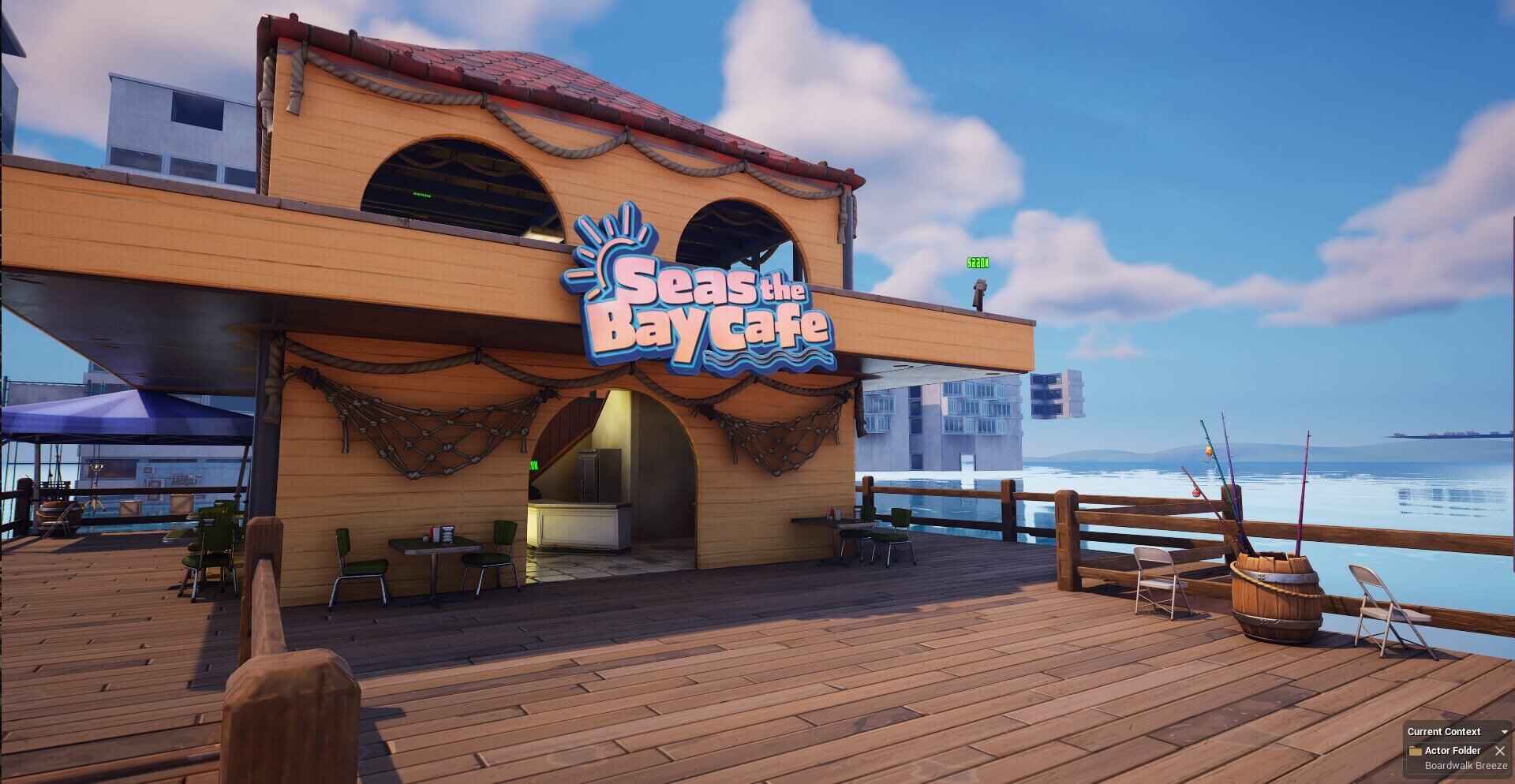
Miami Boardwalk
Created using KitBash3D Boardwalk Architecture Gallery, the district blends playful colors, modular storefronts, signage, and coastal facades, giving JOGO the vocabulary to build one of the most recognizable parts of their map.
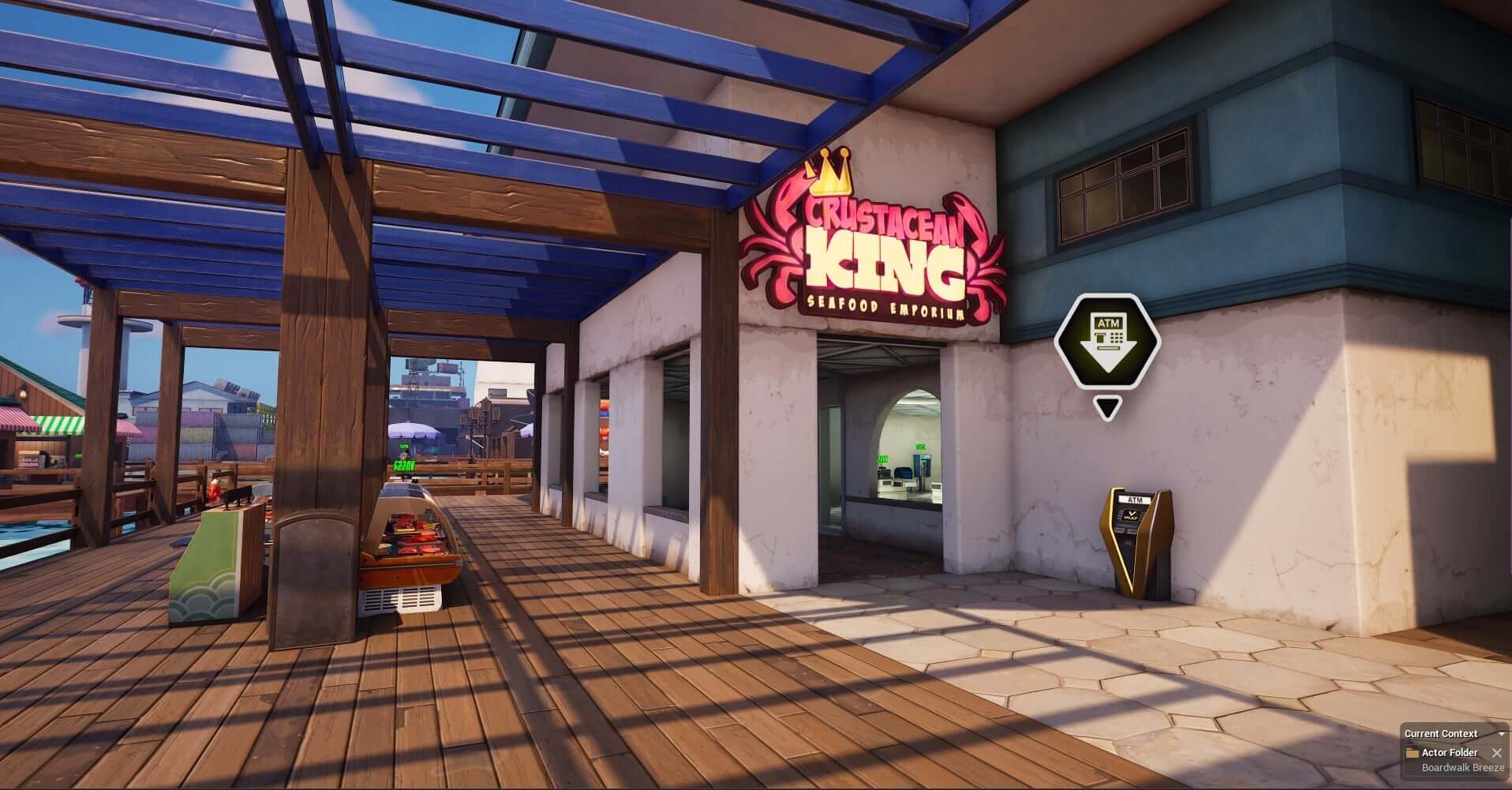
Crustacean King
A standout example of how signage shapes identity. The seafood emporium’s glowing look and feel come from custom signage and shader systems that pull players toward the busy boardwalk.
Cash Heist City shows what’s possible when custom gameplay meets production-quality worldbuilding. Jump in and start playing today.